|
SUMMARY OF RESEARCH
GENETIC BASIS OF AUTOIMMUNE DISEASES
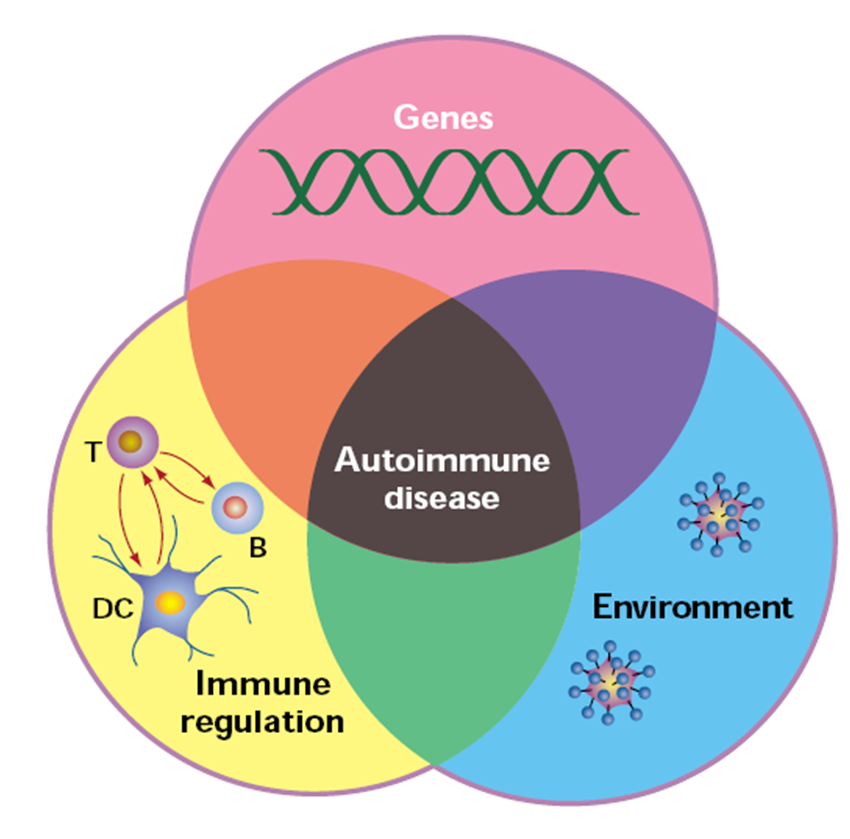
Our research line is mainly focused on the study of the genetic background underlying the so-called 'autoimmune diseases'. Such diseases are characterised by a loss of tolerance to self-antigens of the organism's own tissues as a result of an abnormal activation of T and B lymphocytes. This situation leads to a chronic and exacerbated immune response that reduces dramatically the quality of life of affected people. Although they are considered rare diseases individually, together autoimmunity processes affect approximately 5% of the population in Western countries. However, despite the high morbidity and mortality associated with autoimmune disorders due to their potentially severe and chronic nature, their causes are far from being completely understood.
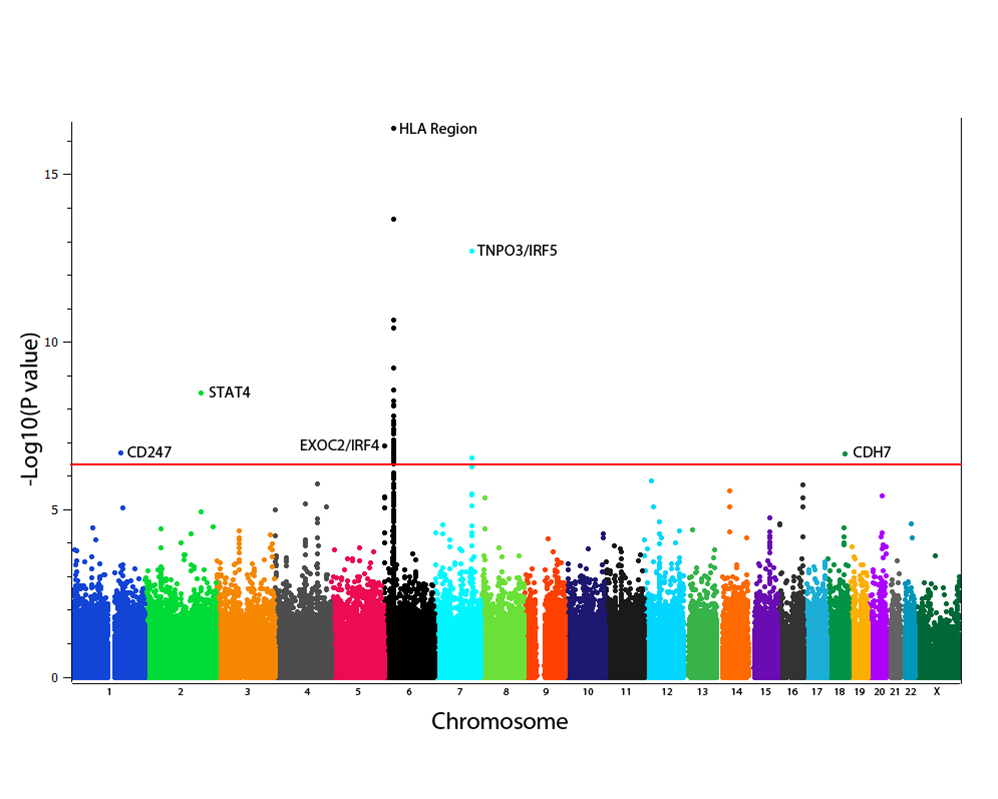
In this regard, during the last decades, our research group has been trying to elucidate the genetic variants involved in the development and progression of several systemic autoimmune diseases such as scleroderma, giant cell arteritis, rheumatoid arthritis, systemic lupus erythematosus or ankylosing spondylitis, amongst others. Thanks to the effort and dedication of the pre- and post-doctoral researchers who have been working in our lab, we have contributed significantly to the current knowledge of the aetiology of these diseases. For instance, in 2010, our group published the first genome-wide association study (GWAS) in scleroderma (Radstake et al. Nat Genet. 2010, 42:426-9), which represented the basis for a series of subsequent studies that placed us as the world leading group in the investigation of the genetic basis of this fibrotic disorder (Gorlova O, et al. PLoS Genet. 2011:e1002178; Martin et al. Hum Mol Genet. 2012, 21:2825-2835; Bossini-Castillo et al. Hum Mol Genet. 2012, 21:926-933; Bossini-Castillo et al. Ann Rheum Dis. 2013, 72:602-607; Martin et al. Hum Mol Genet. 2013, 22:4021-4029; Mayes et al. Am J Hum Genet. 2014; 94:47-61; Lopez-Isac et al. Arthritis Rheumatol. 2014, 66:3521-3523). Amongst them, it should be highlighted the first Immunochip (a platform through which it can be performed a dense analysis of around 200,000 polymorphisms located within 186 known susceptibility loci for autoimmune and inflammatory disorders) conducted in this disease. The study allowed the identification of new scleroderma susceptibility genes like ATG5 (involved in autophagy), DNASE1L3 (which mediates the breakdown of DNA during apoptosis) and the gene encoding interleukin IL-12 (Mayes et al. Am J Hum Genet. 2014; 94:47-61).
Similarly, we have also contributed through collaborations with international consortia to the study of the genetics basis of rheumatoid arthritis. These collaborations have led to high impact results that have been published in prestigious journals such as Nature (Okada et al. Nature. 2014, 506:376-81) or Nature Genetics (Eyre et al. Nat Genet. 2012, 44:1336-40).
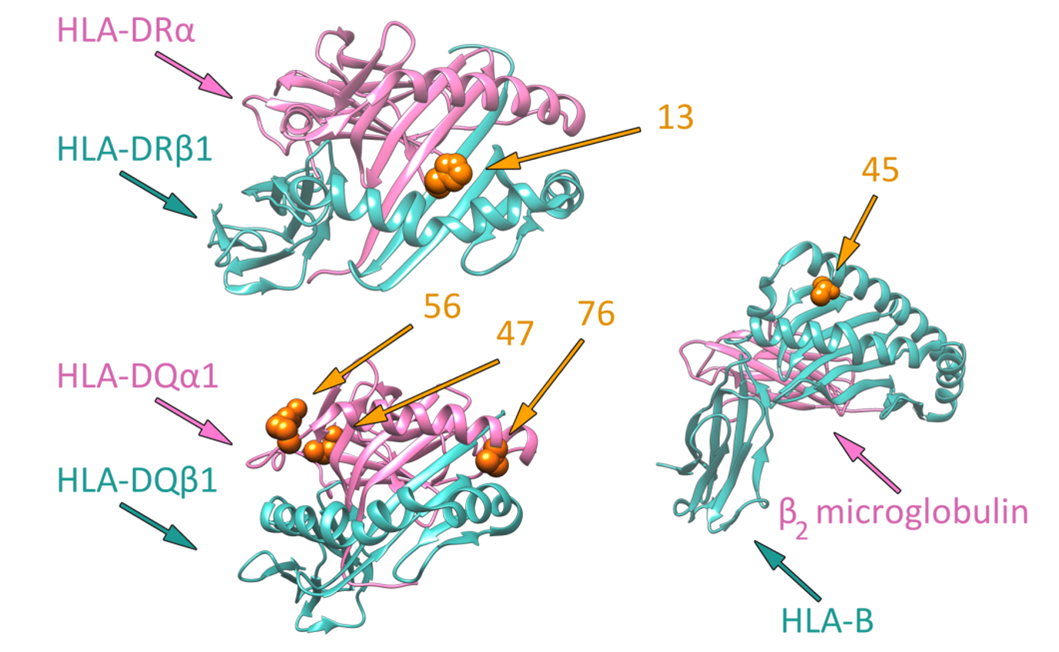
On the other hand, our research group is currently leading a fascinating multicenter project involving several European and North American countries (including Spain, Italy, UK, USA, Canada, Germany, Norway, The Netherlands, Ireland, France, Austria and Belgium). The main objective of this international effort is to conduct the first large-scale genetic studies in giant cell arteritis, a vasculitis that can present very serious complications such as blindness or stroke. This exciting collaboration has allowed us to carry out the first Immunochip on giant cell arteritis, which has been published in the American Journal of Human Genetics (Carmona et al. Am J Hum Genet. 2015, 96:565-80). In this study, we used a state-of-the-art bioinformatic methodology to perform a comprehensive analysis of the major histocompatibility complex (MHC) region at the amino acid level, which generated much public interest and discussion being released in different media:
- RTVE (http://www.rtve.es/noticias/20150529/identifican-los-factores-geneticos-riesgo-arteritis-celulas-gigantes/1153124.shtml)
- IDEAL (http://www.ideal.es/granada/201506/10/cientificos-granadinos-identifican-factores-20150610083254.html)
- CANAL SUR (http://alacarta.canalsur.es/television/video/noticias-mediodia-lunes/1835374/16)
In order to continue shedding light into the aetiology of autoimmune diseases, our next goals are 1) the use of next-generation sequencing techniques, 2) the study of the potential regulatory role on gene expression of the establishes risk variants through the analysis of cellular phenotypes and eQTLs, and 3) the integration of both approaches (genomic and expression data), with the aim to identify the functional implication of the major genetic risk factors associated with these pathologies. For this purpose, our laboratory has powerful servers that enable bioinformatic analyses with a high computational load. We believe that our studies will represent a valuable help in the development of novel diagnostic and prognostic markers for a more effective therapeutic intervention.
FUNDING AGENCIES LAST 5 YEARS
|